
Picture Book Illustrations Simple And Creative Ideas
Table of Contents
Want some original ideas for Picture Book Illustrations? Try new drawing styles, interesting characters, and unusual book layouts to make your children’s story interesting and provide illustrators with some original ideas for illustrations for children.
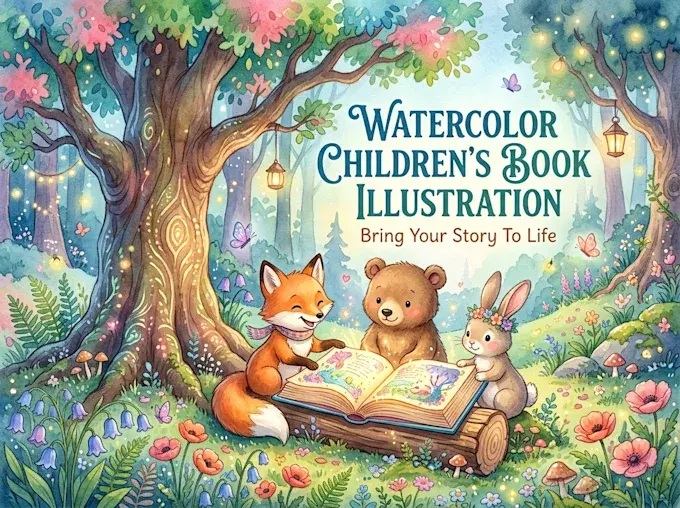
Crafting Magical Visuals For Young Minds
Creative visual storytelling turns complex text into enchanting experiences that engage the imagination of young people immediately. Stunning artwork enables children to relate to the characters within colourful fantasy realms depicted throughout each page.
Thoughtful illustrations motivate children to develop healthy reading habits by stimulating curiosity at varying childhood learning stages. Visual components enable you to create an unbreakable bond that turns story time into a daily routine cherished by families.
Knowing how to craft easy art skills allows storytellers to create high-quality books without difficulties. Learning new ways of approaching your visual story will allow you to captivate your eager readers around the world.
Spark Early Learning Through Bright Primary Colours
The use of strong primary colours grabs the immediate attention of young children in their first-ever storybooks. Red, yellow, and blue create bright colours for storybook elements that create action-packed scenes on each page.
Strong colour contrasts help young children identify the actions of characters and the important objects in the background. Such colour choices ensure the young mind remains totally engaged while at the same time helping with visual development at this age naturally.
The continuous use of such a colourful palette creates visual flow to engage young children throughout the whole story. Artists make use of such bright colours to create environments that attract children.
Enhance Storytelling Depth Using Textured Paper Layers
Incorporating paper textures makes the digital artwork even more interesting by adding delightful tactile features to it in different genres of storybooks.
Creating paper cutouts or using textured backgrounds for the canvas makes the artwork look handmade and is sure to appeal to little children.
The use of this technique helps add some physical dimension to flat drawings, thus making trees, animals, and houses seem real. Using different paper cutouts lends an artistic touch to modern picture book illustrations that both adults and children can enjoy & appreciate.
When combining different paper patterns, kids are able to discover minute visual details through quiet reading sessions alone. Background textures on plain papers create artistic landscapes for kids to discover new things every single day.
Guide Young Readers Using Clever Composition Frames
Designing artworks using natural framing composition ensures that the child’s eye focuses on precisely what is happening. The framing of the focal points using tree branches, door frames, and clouds is an effective way to design balanced and aesthetically pleasing pages.
Good composition designs ensure that there is no unnecessary visual distraction and that young readers can easily and quickly digest the important elements of the story being told.
Placement of focal points using natural visual paths will allow young eyes to navigate effortlessly across two-page spreads while reading stories. These techniques ensure that even the most basic drawings become highly professional and organised visuals.
Capture Playful Energy With Dynamic Movement Lines
The inclusion of some action lines behind running figures and/or flying things can create a great sense of movement in ordinary static illustrations. Whirls of air lines, bouncy arcs, and fast lines add life to any lively illustration with great energy.
These visual aids help the children experience the exhilarating speed of the racing car or the hopping movement of the frog. Such fun illustrations ensure that lively scenes remain lively, dynamic, and full of physical joy at all times.
Using movement lines promotes imitation of fun characters by kids when reading along with their parents. Simple motion graphics transform reading time from a passive activity into an extremely fun one for the lively audience.
Simplify Background Details To Highlight Main Actions
Ensuring that the background scenery is neat and simple makes it easy for the main characters to be clear on each page spread of the illustrated book.
Simple pastels and white space backgrounds eliminate distractions that would make it impossible for early readers to focus entirely.
Eliminating the extra things in the background helps important events and character interplay be visible without any competition from other visuals. This kind of simple approach to illustration is very effective in books written for young toddlers.
Empty background space offers ideal placement areas for the text in a storybook. There is a good balance when the background is simple while the characters in it are detailed.
Build Playful Engagement Using Hidden Visual Details
Hiring a versatile digital book cover creator allows artists to incorporate interesting visual elements in the book cover design, as well as hide small characters in the story. Hiding additional elements, such as a bird or a mouse dressed up in a hat, allows children to explore the pages.
Such visual easter eggs turn regular reading into a game that makes children think and stay interested. The use of such design elements makes each page spread interesting to look at for children.
Interactive visual elements make picture books very replayable since children will be discovering new things on each rereading of the book. These visual elements make book pages into visual games that children love.
Incorporate Familiar Everyday Objects For Instant Connection
By depicting things that are familiar to kids, such as soft teddy bears, chairs, and slippers, they become more comfortable. These familiar objects in the imaginary world of stories help them relate to the story.
Depiction of events that happen to the characters in relation to their daily activities helps children relate to real-life situations through storytelling. By having relatable artistic elements, it builds familiarity among readers and encourages them to pick up the book again and again.
Using common objects in stories helps the child go on a treasure hunt while reading the book together with his or her parents. They will enjoy finding familiar objects from their house hidden in a picture book.
Establish Visual Harmony Using Consistent Character Designs
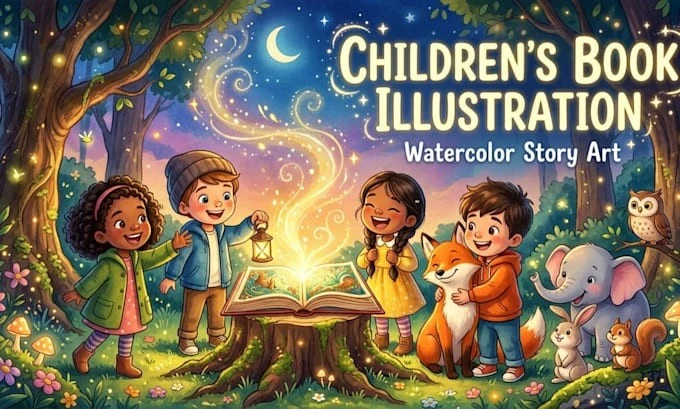
Distinct and easy-to-recognise silhouettes of the characters make sure that children will be able to immediately recognise the heroes throughout the whole book. The same outfit, hairstyle, or special accessories used by the characters create a visual consistency of the plot.
Consistency of visual presentation makes it possible not to lose the thread of the story while reading about different places the heroes go through during their travel. The visual consistency allows children to develop deep emotions towards storybook heroes.
Working on the character model sheets before the illustrating process makes sure that all characters remain consistent on all the pages. Visual consistency establishes trust in readers.
Enhance Storytelling Impact Using Dramatic Perspective Angles
Playing around with low worm’s-eye views or high bird’s-eye views is an exciting way to give variety to your picture book illustrations. Gazing up at the majestic castle or gazing down at the little mouse gives a sense of immediate excitement.
Changes in perspective can be used to show the emotions of awe and wonder without using elaborate wording. Different perspectives on each page prevent the layout of the storybook from becoming monotonous.
By using different perspectives, you are teaching the child to look at the story world from different exciting points of view. Different perspectives ensure that the climaxes of your stories are epic and unforgettable for the excited young reader.
Utilise Mixed Media Techniques For Unique Texture
A combination of conventional coloured pencils, acrylic paint, and digital stamps provides a beautiful piece of artwork full of layers, with a great deal of character.
Mixed media techniques provide endless opportunities for playing with unusual combinations of materials. Combined media children’s book illustration art is a wonderful way to turn each spread of a children’s book into something special, almost like fine art.
Original combinations of textures will attract attention right away and make printed picture books look like real works of art. Trying different materials will help you develop a unique style that publishers cannot resist.
Frequently Asked Questions
What art style is the best for children’s picture books?
It depends on the age group and the theme that you want to present. Primary colours, simple shapes, and line art work well with toddlers. Older children like textured watercolours, digital painting, and mixed-media art styles.
How many illustrations do you need for your picture book?
A typical picture book has thirty-two pages. Hence, a picture book usually has sixteen double-page spreads or roughly twenty to twenty-four pictures per book.
Can I illustrate my own book even though I have no drawing skills?
Yes, you can. Many great children’s picture books have minimalistic designs, collages, cut-outs, vector drawings, or digital drawings. Sometimes, minimalistic design carries much more emotional weight compared to highly detailed drawings.
How do illustrators maintain character designs through all the pages?
Illustrators design character model sheets that include several views of characters, different facial expressions, and poses prior to working on all the pages. The use of the character model sheet consistently throughout the artwork process ensures the same visual look for each page.
What are the common digital tools for the picture book artwork?
Graphic tablets along with software for illustration such as Procreate, Adobe Photoshop, and Clip Studio Paint are common digital tools. With the help of these tools, artists can easily play around with brushes, textures, and colours.
Conclusion
Illustrations of picture books hold a key part in stimulating the imagination of children, aiding early literacy, and creating memorable reading experiences.
Through the use of simple character designs, bold colours, and effective composition techniques, one can create appealing worlds of visual stories that children love.
Experimenting with different artistic techniques such as paper textures, watercolour washes, and mixed media enables artists to create their own visual stories.
Consistency of characters and proper page pacing make sure that the story runs smoothly while still exciting the young reader.

My writing for ChildrenIllustration.co.uk delves into the area of creative book art for young readers. I’m interested in how pictures contribute to the development of characters, scenes, and emotions in a tale. My writings contain concepts that motivate writers, publishers, and artists alike. This place is dedicated to telling visually compelling stories.