
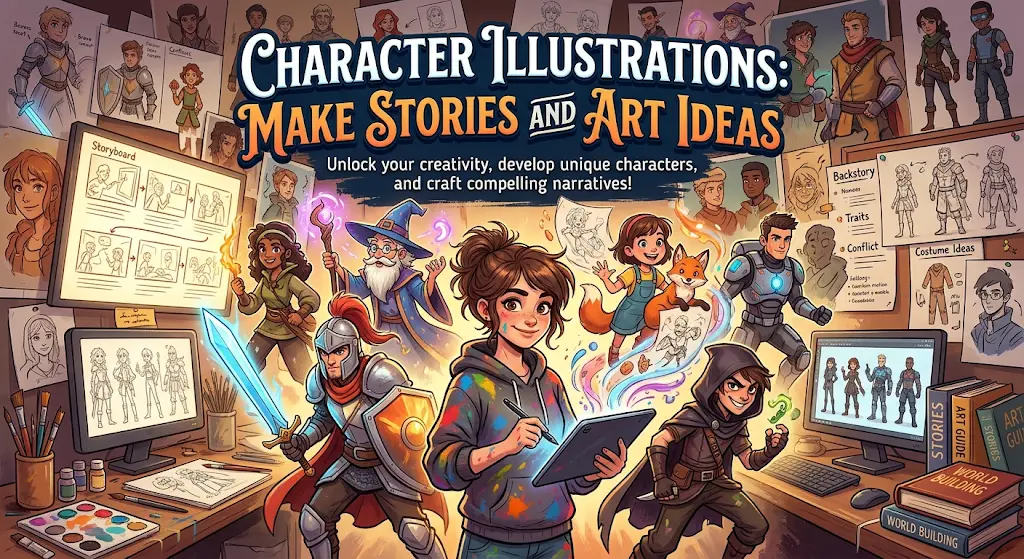
Character Illustrations: Make Stories and Art Ideas
Table of Contents
We all have creative ideas floating around in our minds. But the question is, how can you turn those ideas into something people can actually see and connect with?
The answer is simple! You can just add character illustrations to the story.
These illustrations can actually turn simple ideas into memorable visuals. They basically help readers understand emotions and connect with fictional personalities.
Besides that, they bring imaginary personalities to life and make stories more enjoyable. However, you must keep in mind that creating appealing characters isn’t just about drawing pretty pictures.
You need to understand character artwork in detail. So, what are we waiting for? Let’s get started!
What Are Character Illustrations?
Have you ever looked at a storybook character and immediately understood its personality without reading a single word? Well, that’s the power of character illustrations!
Character diagrams basically show the visuals of people, animals, or fictional creatures. They communicate not only appearance and personality but also emotions and a character’s role in a story.
On top of that, these illustrations can be simple sketches, colourful digital drawings, detailed paintings, or cartoon-style artwork.
However, you may not know this, but creating a character involves much more than drawing its face and body. You must carefully consider colours, clothing, body language, facial expressions, and other visual details to make each character distinctive.
Many children’s book publishers often provide illustration services. But some don’t. You must verify all services before hiring a publisher.
What Are the Top Character Illustration Ideas?
Now that we understand what character illustration means, let’s explore different ideas.
We all know that every story has a different mood and audience. This is why choosing the right illustration style is essential.
1. Cartoon Illustrations
Who doesn’t love a funny cartoon character? Cartoon illustrations basically use exaggerated facial expressions, simplified shapes, and playful features. This makes characters attractive and entertaining.
This illustration style is especially popular in children’s books. This is because it makes characters approachable and easy to recognise.
You can exaggerate not only eyes and hands but also facial expressions to communicate different emotions.
2. Realistic Illustrations
Realistic illustrations, on the other hand, focus on natural appearances and accurate details. You have to pay attention not only to body proportions and facial features but also to lighting and textures.
This style works well when a story needs believable characters or detailed visuals.
3. Fantasy Illustrations
Do you love magical creatures, mysterious worlds, and imaginary adventures? If so, then fantasy illustrations might be your favourite!
This style allows you to explore your creativity without traditional limitations. You can create not only fairies and mythical creatures but also talking animals and characters with powers.
4. Minimalist Illustrations
You must also agree that sometimes, less really is more! Minimalist illustrations use simple lines, basic shapes, and limited colours to communicate ideas.
Instead of adding unnecessary details, you have to focus on a character’s most important characteristics.
This helps you create clean and attractive designs that are easy to understand.
5. Watercolour Illustrations
Besides that, watercolour illustrations use soft colours, gentle textures, and beautiful colour blending. This creates an artistic appearance.
They are especially suitable not only for heartwarming stories and nature-inspired books but also for children’s picture books. Their gentle appearance can make a story feel peaceful and inviting.
What Is the Importance of Character Illustrations in Storytelling?
You might be wondering whether these character illustrations are actually important in storytelling, right?
Well, illustrations do matter a lot. This is because they not only create emotional connections and make stories memorable but also support understanding and encourage imagination.
In addition to this, these artworks allow readers to build a visual identity.
● Create Emotional Connections
Imagine you are reading about a little girl who loses her favourite toy. The words might explain how sad she feels. But an artwork showing her teary eyes and disappointed expression makes that emotion easier to understand.
Readers can connect with characters when facial expressions and body language communicate their feelings.
This can be quite significant for young readers who are still learning to recognise and understand different emotions.
● Make Stories Memorable
Besides that, think about the characters you remember from your favourite childhood stories. You might be able to remember a few. The reason?
Well, it’s their unique appearances that played an important role in making them unforgettable.
When characters have a consistent visual identity, readers can recognise them even when they appear in different scenes or situations.
● Support Understanding
You must keep in mind that not every reader understands a story the same way. Some may find certain descriptions difficult to imagine. And others often struggle with unfamiliar words.
However, drawings can make these situations much easier.
On top of that, words and images often work together in picture books. This helps them communicate information neither could express as effectively on its own.
● Encourage Imagination
One of the best things about illustrated stories is that they encourage readers to think beyond the written words.
A drawing of a mysterious forest might make children wonder what lives behind the trees. Similarly, an unusual creature might inspire them to imagine its name, abilities, and adventures.
This makes reading an interactive experience rather than simply following written sentences.
● Build Visual Identity
You must also know that every story needs something that makes it recognisable. But you may not know that character designs can become an important part of a book’s visual identity. Right?
Well, it’s true! Readers can identify the same characters throughout a story not only with consistent colours and clothing but also with consistent facial features and illustration styles.
This can be especially useful when you are developing multiple books with the same characters.
How Can You Create Memorable Characters That Bring Art Ideas to Life?
To create unforgettable character sketches, you must begin with a strong character personality. Also, experiment with various shapes, colours, and expressions.
In addition to this, you have to maintain consistency across different illustrations. You can also use background and details of your artwork to support the story.
● Start with a Strong Character Personality
Before you draw anything, you must think about who your character really is.
Is the character brave, shy, funny, adventurous, or mischievous? What does it enjoy doing? What makes it different from others?
These questions will help you develop a clear personality.
A shy little bear might have a gentle expression, slightly lowered eyes, and a soft-coloured outfit. On the flip side, an energetic bear might have not only a wide smile and raised eyebrows but also a playful posture.
You need to keep in mind that the appearance should reflect the personality. This makes the character feel more natural and believable.
● Experiment with Shapes, Colours, and Expressions
Now comes the fun part!
You need to start experimenting not only with different shapes and colours but also with different facial expressions. You might be surprised by how much these small details can change a character’s appearance.
You can use rounded shapes to create a friendly and welcoming feeling. Besides that, sharp angles help you hint at tension or mischief.
Colours also influence how readers perceive characters. Bright shades can create an energetic atmosphere, while softer tones may communicate calmness and warmth.
And how can we forget facial expressions? You can try drawing your character smiling, crying, laughing, surprised, and confused.
These variations will help you understand how the character behaves in different situations.
● Maintain Consistency Across Different Illustrations
On top of that, creating one attractive character drawing is not enough when you are illustrating an entire book. You have to make sure the character looks recognisable on every page.
When you see a character appear with different hairstyles, eye colours, and clothing in every drawing, it’s confusing, right?
Well, to avoid this, you can create a character reference sheet. You must include its front, side, and back views. You should also include not only different expressions and poses but also colours and clothing details.
This reference will help you maintain consistency throughout the project.
● Use Backgrounds and Details to Support the Story
We all know that characters don’t exist in empty spaces. Their surroundings also contribute to the storytelling experience.
For instance, a child standing in a colourful garden might communicate curiosity and happiness. The same child sitting alone in a dark room could create an entirely different atmosphere.
Small details can also make illustrations more interesting. You can add toys, books, plants, furniture, or other objects that connect with the character’s personality.
However, don’t overcrowd the artwork. This is because every background element should support the story rather than distract readers from the main character.
You can also consider seeking a reliable book illustration service if you’re struggling. These experts will provide you with visually appealing artwork based on your instructions.
Frequently Asked Questions
What is meant by character illustration?
Ans. Character illustration is basically the art of visually creating not only a fictional person and animal but also creatures from scratch. This helps readers connect with the story and better understand emotions.
Which character illustration style is best for children’s books?
Ans. There is no single best style for children’s books. The right character illustration actually depends on your story’s tone and your target age group. You can consider not only cartoon and watercolour but also minimalist and fantasy illustrations.
How can you improve your character illustration skills?
Ans. To improve your character illustration skills, you must start by practising not only basic shapes and facial expressions but also body proportions and colour combinations. You should also study different illustration styles and create reference sheets for your characters.
Let’s Bring It All Together!
Creating memorable characters is all about combining imagination with thoughtful design. From choosing the right illustration style to developing unique personalities and expressive faces, every little detail matters.
Whether you are creating artwork for a picture book or exploring new creative ideas, remember to keep your characters recognisable and connected to the story.
To create memorable character artworks, you have to start with a strong character personality and maintain consistency across different illustrations. On top of that, you should experiment with various shapes, colours, and expressions. You can also use background and details of your artwork to support the story.

My writing for ChildrenIllustration.co.uk delves into the area of creative book art for young readers. I’m interested in how pictures contribute to the development of characters, scenes, and emotions in a tale. My writings contain concepts that motivate writers, publishers, and artists alike. This place is dedicated to telling visually compelling stories.