
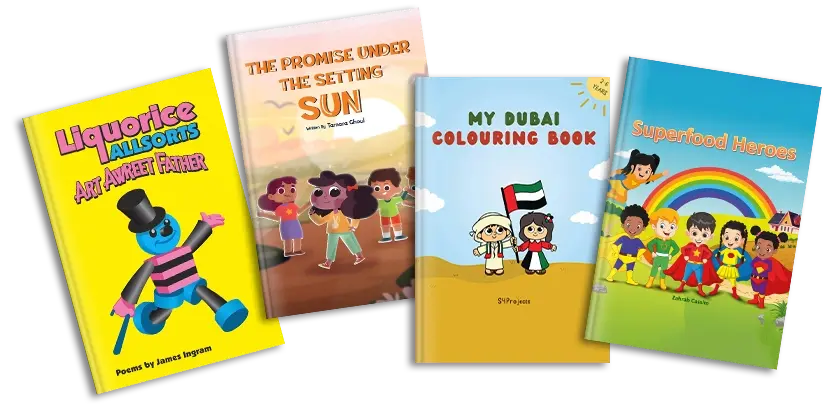
How to Design a Kids’ Book Cover That Sells
A children’s book cover is only seen for a fraction of a second, but it can do wonders for your sales if done right! A great cover not only captures the attention but tells your audience that the book deserves a chance to be read!
Most of the authors struggle when it comes to selling their book because of a poorly designed cover. Despite a great story for young minds, a lack of attention to design is a hurdle in their sales journey. So what is the right way to design a cover that convinces the parents and kids to pick your book? Keep reading to find out!
Why Does Designing A Children’s Book Cover Seem Challenging?
Designing a children’s book cover is a huge responsibility. As an author, you need to consider the factors related to two distinct audiences in your mind. These are,
- Parents who are searching for a age appropriate and high-quality book for their children
- Little minds who are searching for something enjoyable, something that sparks their interests instantly!
Someone who has mastered the art of creating visually appealing covers knows how to strike the perfect balance between the needs of these two different audiences. This is the reason most of the authors search for a Top-Rated Children’s Book Illustration Agency In UK.
Why Designing A Great Kids’ Book Cover Matters?
Bookshelves are full of spines that the audience never once considers. On the other hand, some of them are instantly chosen by hundreds of people who are passing through while giving a glance at these spines.
The difference? It lies in something that sets an immediate first impression. Something that makes them pause and gives a closer view into your book. That is, a well-designed cover!
Here is why focusing on the book cover design can help you stand out among others.
Sparks Curiosity
Children are automatically drawn to bright colours, playful characters, and fun visuals. It drives a sense of excitement among them and builds an instant connection with the book. A good design persuades children to open the book, give it a read, and take it home!
Reflects The Storyline
A well-designed cover invites the reader to explore the adventure that is waiting inside for them! It gives them a hint of the magical world that they are going to step into once they open the book.
Builds Credibility
While children can only place their hands on a book they are interested in, the purchase decision depends on the parents. Parents are constantly searching for signals of quality and worthiness. This is why a professional and polished design is necessary to build trust among adult buyers.
Boosts Visibility
Almost every bookstore and online bookselling places are extremely crowded. Among this sea of books, staying visible is a huge challenge for authors. However, a strong cover design is what makes a book unique among others.
What Is The Right Method To Design A Book Cover?
Let’s take a look at the key strategies that can boost the chances of success of your book.
Understand The Target Audience
Different age groups respond to different styles. Make sure to research your target market and explore the covers of bestselling books.
- Toddlers from ages 2-4 prefer simple shapes and bold illustrations
- Early readers aged from 5-7 love playful characters and energetic scenes
- Older children from 8-12 prefer more detailed illustrations and a bit
Use Bright And Eye-Catching Colors
Color makes a huge difference for the readers. Here is what you need to do,
- Use bright and cheerful shades to grab attention
- Align the colors with the mood of your story
- Create a strong contrast to ensure that the title stands out
- Avoid the use of dark shades
For instance, here is how color palettes work for kids,
| Shades | Feelings |
| Warm yellow, soft blues | Magical feeling during bedtime tales |
| Bright shades of yellow and orange | Instills a sense of happiness and energy |
| Combination of primary colours | Clear and clean shades |
| Clear and clean shades | Educational and teaching purposes |
Create Engaging And Memorable Characters
Characters bring the main energy to a book. Children feel more connected to a book when they find relatable characters in it. While you create children’s book cover, make sure to,
- Place the main character prominently on the cover
- Use expressive faces and emotions
- Demonstrate characters in action or adventure scenes
- Keep designs friendly and approachable
Use Child-Friendly Typography
Typography matters as much as the design. Some of the good typography practices include,
- Make use of easy-to-read and fun fonts
- Position the title strategically to ensure that it can be read at a glance
- Don’t let the font cover your art
- Avoid the use of overly decorative fonts
- Maintain a strong contrast between text and background
Let Your Cover Tell The Story
Add details related to the story that immediately spark curiosity among children. Examples of a few storytelling elements include,
- A character discovering something surprising
- A magical object or a mysterious place
- A moment of adventure or excitement
- A humorous situation
These situations encourage children to ask more questions regarding the story. It convinces them to open the book and find what is going on.
Test Before Publishing
Once you are done with the design, don’t forget to test it in different ways before publishing.
- Shrink your design to a thumbnail size. Is your title and design still readable?
- Match your cover with a competitor’s design. Does it stand out beside them?
- Ask for suggestions from friends, family, and children around you
Refining the designs based on these suggestions can ensure the overall look is clean and perfect!
FAQs
- What are the common trim sizes for children’s books?
Trim size is known as the height and width of a book. 12’’x9″ or 9’’x7″ works for board books, 10’’x10″ or 10’’x8″ works for picture books, and 6’’x9″ is recommended for chapter books that focus more on the text rather than design.
- What are the common mistakes that authors make while designing a book cover?
The use of dark and muted tones, cluttered images, a difficult-to-read font, poor quality contrast, a cover that doesn’t align with the storyline, inconsistency in the character details, and not performing the thumbnail test are some of the common mistakes.
- How can I ensure colour accuracy for printing book designs?
To ensure colour accuracy, make sure to convert your digital cover to a CMYK colour profile. The process involves changing an image’s colour mode from RGB mode, which is used for screens, to CMYK to prevent dull or inaccurate colors.
Wrapping Up
Designing a cover is a combination of unique and creative efforts. A great cover doesn’t just consist of decorative elements; instead, it has the power to capture attention, introduce the story, and invite the children to an imaginative world! Work on the elements mentioned above, and you are all set to create a book that turns into a powerful marketing tool.

My writing for ChildrenIllustration.co.uk delves into the area of creative book art for young readers. I’m interested in how pictures contribute to the development of characters, scenes, and emotions in a tale. My writings contain concepts that motivate writers, publishers, and artists alike. This place is dedicated to telling visually compelling stories.