
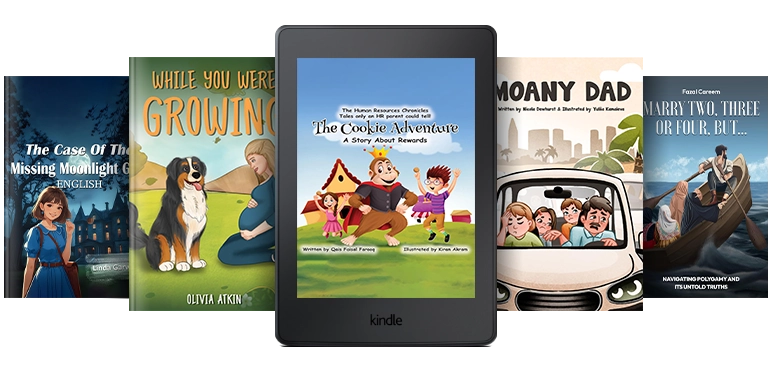
Your ebook may have the perfect title, the strongest idea, and the cleanest writing, but none of it matters if readers scroll past.
In a world where attention spans are shrinking and screens are crowded, visuals have become the quickest way to stop a wandering thumb. And that is exactly where illustration steps in.
Illustrations communicate with the readers. They turn abstract thoughts into something your reader can instantly feel.
A single sketch can spark curiosity, simplify a tough concept, or set the mood before a single word is read. That is a power plain text can’t always match.
Imagine two ebooks side by side, same topic, and same length. One is just text.
The other has expressive illustrations that pull you into the story. Which one would you click first?
Exactly.
That tiny visual edge can be the difference between being noticed… and being forgotten.
How ebook illustration turns your book into an experience
Illustration gives your words a voice of their own. They add personality, rhythm, and clarity to ideas that might otherwise feel flat. With just one image, a complex concept can suddenly make perfect sense.
They also guide your reader’s emotions. A warm palette can make your story feel cozy. A bold graphic can make a lesson feel powerful.
Illustrated ebooks feel memorable. They stand out in crowded marketplaces, get clicked more often, and keep readers engaged for longer. In a sea of text-only content, yours becomes the book they remember.
The psychology behind visual storytelling
Best ebook design illustration taps directly into how our brains prefer to learn. Humans remember visuals far faster than text, and we process images almost instantly.
This means an illustrated ebook actually becomes easier to understand. When readers can see concepts visually, they stay connected, learn faster, and retain more of what you are teaching or sharing.
Seeing a character, a diagram, or even a simple icon created an emotional bridge. It feels more real, more vivid, and more personal.
That emotional pull is what keeps readers turning the digital pages instead of drifting off to another app.
Breaking down complex ideas with ease
You know how some topics feel heavy or intimidating? Illustrations simplify them. Instead of long blocks of text explaining a process, a timeline, or a concept, a single graphic can do the job effortlessly.
Charts, flow diagrams, infographics, and step-by-step illustrations help the reader grasp ideas without feeling overwhelmed. This makes your ebook not only more engaging but also more useful.
And useful content?
That is the kind of reader who shares and recommends.
Even in storytelling genres, visuals help readers imagine your world exactly the way you intended. They eliminate confusion and replace it with clarity, immersion, and delight.
Making your ebook more accessible
Not everyone absorbs information the same way. Some people learn visually, others prefer stories, and some need a blend of both. Illustrations make your ebook versatile.
They help non-native readers understand tricky sections, break long text into shorter sections for those with attention challenges, and provide context cues to support comprehension.
In short, visuals widen your audience, because more people can enjoy and understand what you have created.
This inclusivity alone makes the illustrations worth it. When more people can connect with your message, your impact grows.
Building a strong brand identity
Illustrations are not just for decoration. They communicate your brand’s personality. Whether you aim for playful kids illustration, minimalistic, bold, or elegant visuals, custom visuals help readers instantly recognize you.
Think of your ebook as a branded experience. When your illustrations match your color palette, tone, and message, your content feels polished and professional. It tells the reader, “This author knows what they are doing.”
Plus, consistent visuals increase trust. People are naturally drawn to things that feel cohesive and thoughtfully designed. A well-illustrated ebook signals quality long before the reader finishes the first chapter.
Enhancing reader engagement and retention
Let’s be honest, ebooks are complete with notifications, YouTube thumbnails, and endless scrolling. You need something powerful enough to hold a reader’s wandering attention. That is where illustrations work their magic.
- Studies show that visuals can improve comprehension by up to 400%, and readers are 80% more likely to finish content that includes compelling visuals compared to plain text.
- Even better, people remember 65% of visual information after three days, while they recall only 10% of written text alone.
That means your illustrations are doing far more than decorating.
Illustrations act like mini reset buttons for the brain. When the reader hits a visual, their attention refreshes. They focus.
They naturally slow down and absorb more of what you are saying.
As a result, an illustrated ebook feels lighter, more dynamic, and much easier to finish.
And completed ebooks lead to better reviews, more recommendations, and long-term reader loyalty, the kind every author dreams of.
Visual elements, ideal file sizes, and importance for ebooks
| Visual Element | Ideal File Size | Importance |
| Cover Art | 1–2 MB (high-resolution JPEG/PNG) | Your ebook’s first impression. A strong cover increases clicks, boosts credibility, and improves marketplace visibility. It’s your “billboard” in a crowded store. |
| Thumbnail (For Store Listings) | 50–200 KB (optimized JPEG) | This is what readers see when scrolling. A clear, eye-catching thumbnail increases click-through rates and helps your ebook stand out among dozens of titles. |
| Images Inside the Book | 100–300 KB per image (compressed JPEG/PNG) | Breaks large blocks of text into smaller chunks, improves readability, and increases engagement. Helps readers stay focused and reduces fatigue. |
| Infographics | 200–500 KB (optimized PNG/SVG-like clarity if allowed) | Ideal for explaining complex ideas quickly. Infographics increase comprehension, boost retention, and make your ebook feel more premium and professional. |
Frequently asked questions
- Do illustrations really make a difference in an ebook?
Absolutely. Visuals boost comprehension, improve memory, and significantly increase reader engagement. They help your content feel richer and easier to navigate, leading to higher completion rates.
- Can illustrations work for non-fiction ebooks?
Yes! In fact, non-fiction often benefits the most. Diagrams, charts, infographics, and visual examples make complex topics easier to understand and digest.
- Are illustrations expensive to add?
They don’t have to be. You can choose from custom illustrations, templates, or even minimal icon-based visuals depending on your budget. The investment usually pays off in higher reader satisfaction and stronger branding.
Wrapping it up
At the end of the day, an ebook is not just a file, but a whole different experience. Illustrations help transform that experience from ordinary to unforgettable.
They make your ideas clearer, your message stronger, and your brand more distinctive.
In a crowded digital world where readers have endless choices, visuals give your ebook the competitive edge it needs to stand out. Whether you are teaching, storytelling, or guiding, illustrations ensure your words don’t just get read, but remembered.